

NDEAM and Employment First
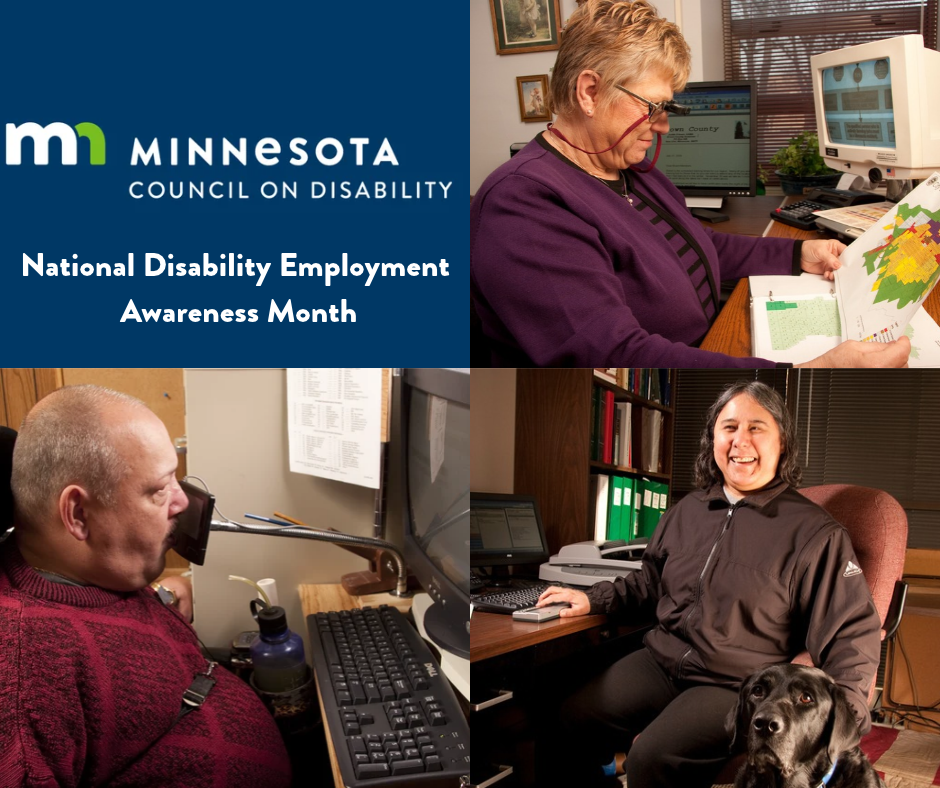 October is National Disability Employment Awareness Month (NDEAM). It is a time to recognize the value and talent people with disabilities bring to Minnesota’s workforce and to reinforce the commitment to employment that fits the person.
Since 2020, Minnesota has been engaged in an ongoing debate about Employment First and the use of Section 14(c) employment in Minnesota. Section 14(c) of the Fair Labor Standards Act allows certified employers to pay subminimum wages to workers with disabilities for the work they perform.
Many advocates call for ending subminimum wages in disability employment, while other community members argue that certain sheltered employment models remain the only option for some people.
One thing often overlooked in the debate over ending subminimum wages is that disability employment is broader than a simple either‑or between sheltered employment and competitive integrated employment. What’s needed is a continuum of individualized options that can meet people where they are and help them get where they want to go.
Employment First in Minnesota
Minnesota’s Employment First policy establishes the expectation that working‑age Minnesotans with disabilities can work, want to work, and can achieve competitive integrated employment. It also says people should be offered the opportunity to work and earn a competitive wage before being offered other supports and services.
The challenge and opportunity now is to ensure that first in Employment First truly means first considered, fully supported, and driven by informed choice. The central questions are what the person can contribute, what meaningful work looks like for them, and what must change or be provided so they can succeed.
A successful transition from Section 14(c) employment is not about finding one model that works for everyone; it’s about building an employment system that recognizes the diversity of people with disabilities, their skills and ambitions, and the supports they may need to succeed.
Competitive Integrated Employment
Under federal law, competitive integrated employment (CIE) is paid work at or above minimum wage, with pay and benefits comparable to peers. It occurs in settings where workers with and without disabilities interact, and it offers similar opportunities for advancement. CIE can be full‑time or part‑time, including self‑employment. It may occur with or without employment supports.
For many people with disabilities, CIE may look similar to any other job: applying for a position, getting hired, receiving reasonable accommodations, and building a career. For others, getting to that outcome requires a more individualized pathway. Employment options such as supported employment and customized employment help people get and keep jobs in CIE.
Supported Employment and Long‑Term Supports
Supported employment recognizes that some people need assistance to find a job and to learn the job, navigate workplace expectations, communicate with coworkers, and manage changes. The goal is to maintain employment over time. Support does not mean a person is less capable of working; sometimes the barrier is not the person’s ability to perform the job—it is the mismatch between how work is traditionally structured and how an individual works best. The right support can bridge that gap.
Examples of supports include:
- A job coach
- Assistance learning new tasks
- Help communicating with an employer
- Workplace accommodations
- Help navigating changes in supervisors or schedules
- Ongoing support when circumstances change
Minnesota’s Extended Employment program provides long‑term supports that can help employees learn new tasks, adjust to workplace changes, and maintain employment.
Customized Employment
Customized employment designs work around the person’s strengths, interests, skills, support needs, and employment goals. The process can involve identifying a person’s abilities and interests, developing relationships with employers, and matching job skills with employer needs. This can be particularly valuable for people whose skills do not fit neatly into traditional job descriptions, and it can be beneficial to the employer, the employee, and coworkers. Customized employment asks an important question: What if we designed work around the person’s strengths instead of requiring the person to fit an existing job?
Choice in Practice
Employment First is sometimes misunderstood as meaning that every person with a disability must work. When discussion includes phasing out subminimum wages, some people worry about what that work will look like. In fact, Employment First gives people with disabilities the best chance at employment that is structured to be meaningful and built with individual success in mind. It means that disability should not automatically result in someone being excluded from employment, placed on a predetermined path, or assumed incapable of contributing to the workforce. It means asking people what they want and providing enough information and experience to make an informed choice, along with the supports necessary to make that choice possible.
Legal Disclaimer:
EIN Presswire provides this news content "as is" without warranty of any kind. We do not accept any responsibility or liability for the accuracy, content, images, videos, licenses, completeness, legality, or reliability of the information contained in this article. If you have any complaints or copyright issues related to this article, kindly contact the author above.
